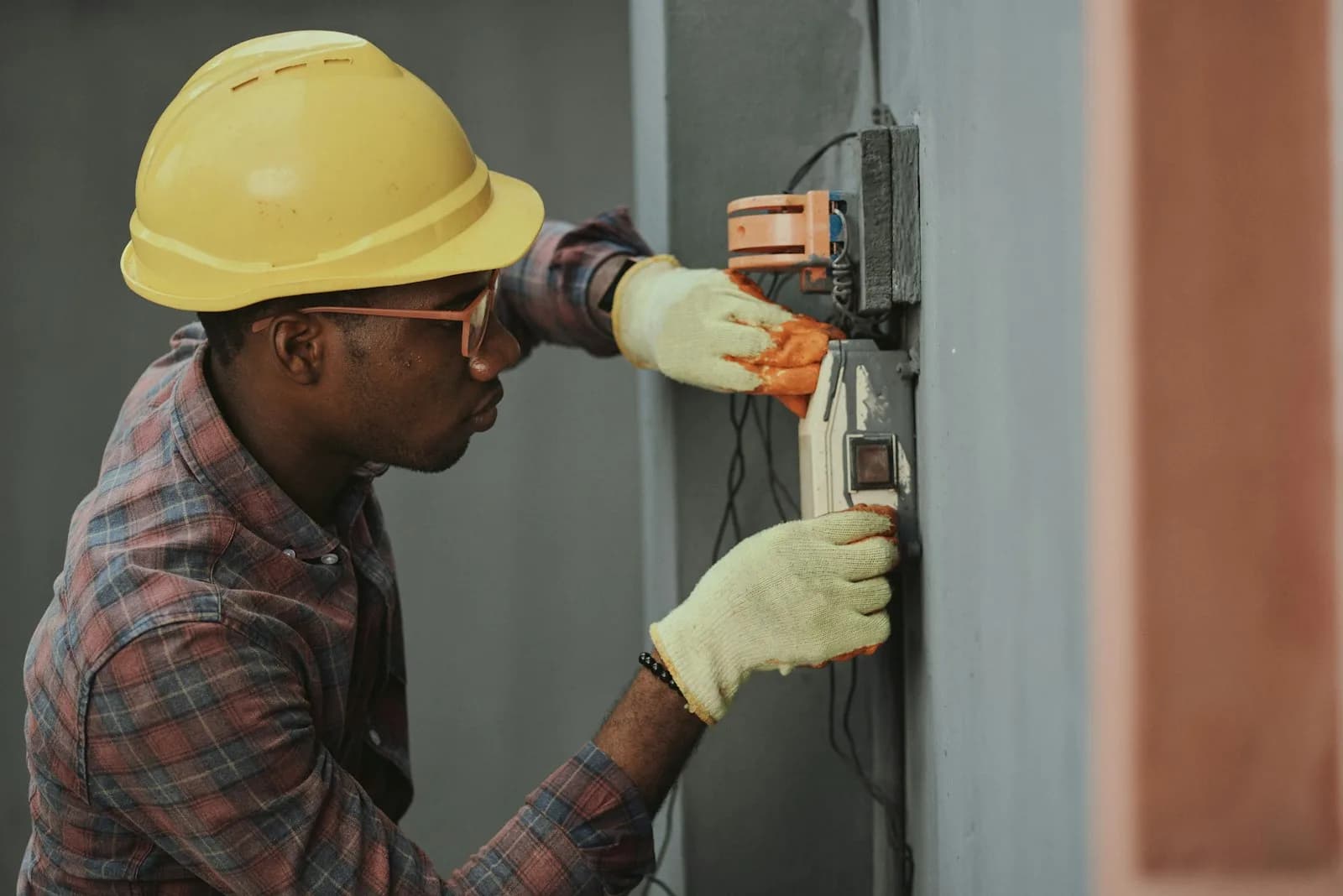
If you are buying a home in Temecula or Murrieta, your inspection report will almost certainly flag some electrical issues. Some are minor. Others are worth walking away from — or worth using to renegotiate the price. Here are the biggest electrical red flags we see when we do inspection follow-ups, and what each one really means for the deal.
1. Federal Pacific Stab-Lok Panels
Federal Pacific Electric (FPE) manufactured Stab-Lok panels from the 1950s through the 1980s. Independent testing has shown that FPE breakers fail to trip under overload conditions at a much higher rate than modern breakers — the exact condition they exist to prevent. FPE panels are strongly associated with residential electrical fires. If your inspection flags a Federal Pacific panel, the correct response is full replacement, not a repair. Budget $2,500-$5,000 depending on service size.
2. Zinsco or Sylvania-Zinsco Panels
Same story as Federal Pacific: Zinsco panels have documented issues with breakers welding to the bus bar, breakers failing to trip, and bus bars overheating. Insurance carriers in California increasingly refuse to write policies for homes with Zinsco panels. Full replacement is again the right answer.
3. Aluminum Branch Wiring
Between 1965 and 1973, single-strand aluminum wire was used for household branch circuits (outlets, switches, lighting) in many Temecula Valley tract homes. Aluminum expands and contracts more than copper, and connections at outlets and switches loosen over time — which creates heat and, in the worst cases, fires. Full rewiring is the definitive solution but can cost $8,000-$15,000. A less-expensive alternative is COPALUM crimp or AlumiConn repairs at every device, which retrofit specialty connectors to safely handle the aluminum. Either way, this is a real negotiating point.
We cover identification, insurance implications, and the three accepted repairs in our full guide to aluminum branch wiring.
4. Double-Tapped Breakers
Two wires under a single breaker terminal that is only rated for one wire is a "double-tap." It is a code violation, causes heat at the connection, and is one of the most common findings on inspection reports. Most double-taps are simple to fix — split the wires onto separate breakers, install a properly rated tandem breaker, or add a subpanel if the panel is out of space. Usually a $200-$800 repair depending on scope.
5. Missing GFCI and AFCI Protection
Any home built before the mid-2010s likely does not meet current GFCI and AFCI code requirements. This is not usually a safety emergency, but it is worth pricing out as part of due diligence. Bringing an average 3-bedroom Temecula home up to current GFCI/AFCI code typically runs $600-$1,500 depending on panel compatibility. This falls under general code corrections work.
6. Knob-and-Tube Wiring
You will rarely see this in Temecula Valley homes — most were built after 1970 — but any true 1940s-or-earlier home may still have knob-and-tube wiring in attic runs or unfinished sections. Knob-and-tube lacks a ground wire, cannot be safely covered by insulation, and cannot handle modern electrical loads. It is a rewire situation, and it materially affects insurability.
7. Unpermitted Additions and Sub-Panels
Old garages converted to living space, backyard workshops with power, and pool-equipment subpanels are all common sources of unpermitted electrical work. You can usually tell from the panel: unlabeled circuits, mismatched breaker brands, cables entering the panel through drilled holes without proper connectors. Unpermitted work is not automatically dangerous but it needs to be inspected, corrected where necessary, and permitted retroactively. This can range from a $500 correction to a small rewire.
See which electrical work needs a permit in Riverside County for what should have been permitted in the first place.
8. Warm or Discolored Breakers, Bus Bars, or Panel
If the inspector notes any breaker warm to the touch, any discoloration inside the panel, or a burning smell, do not accept "we will just replace that breaker" as the resolution. Heat damage on a panel bus bar is a full panel replacement, not a spot repair — the damaged bus cannot be spot-fixed. Assume $2,500-$5,000.
9. Ungrounded Two-Prong Outlets
Some homes still have original ungrounded two-prong outlets. GFCI protection can be substituted for a true ground and made code-compliant with labeling, but the safer long-term fix is running a ground wire. This is a moderate-cost project — usually $1,000-$3,000 depending on how many outlets are affected.
10. Reversed Polarity and Miswired Outlets
Cheap to fix (under $200), but a common inspection finding. It means the hot and neutral are swapped at the receptacle. Not immediately dangerous but a safety issue for anything sensitive plugged in. Fix it before closing.
Get a Pre-Purchase Electrical Evaluation
Westek Electric Corp. does pre-purchase electrical evaluations for buyers throughout Temecula, Murrieta, Menifee, and the surrounding areas. If your inspection report has flagged electrical issues and you need real numbers to bring back to the seller, call (909) 996-6678. Getting an accurate repair estimate before you close can save you tens of thousands of dollars.