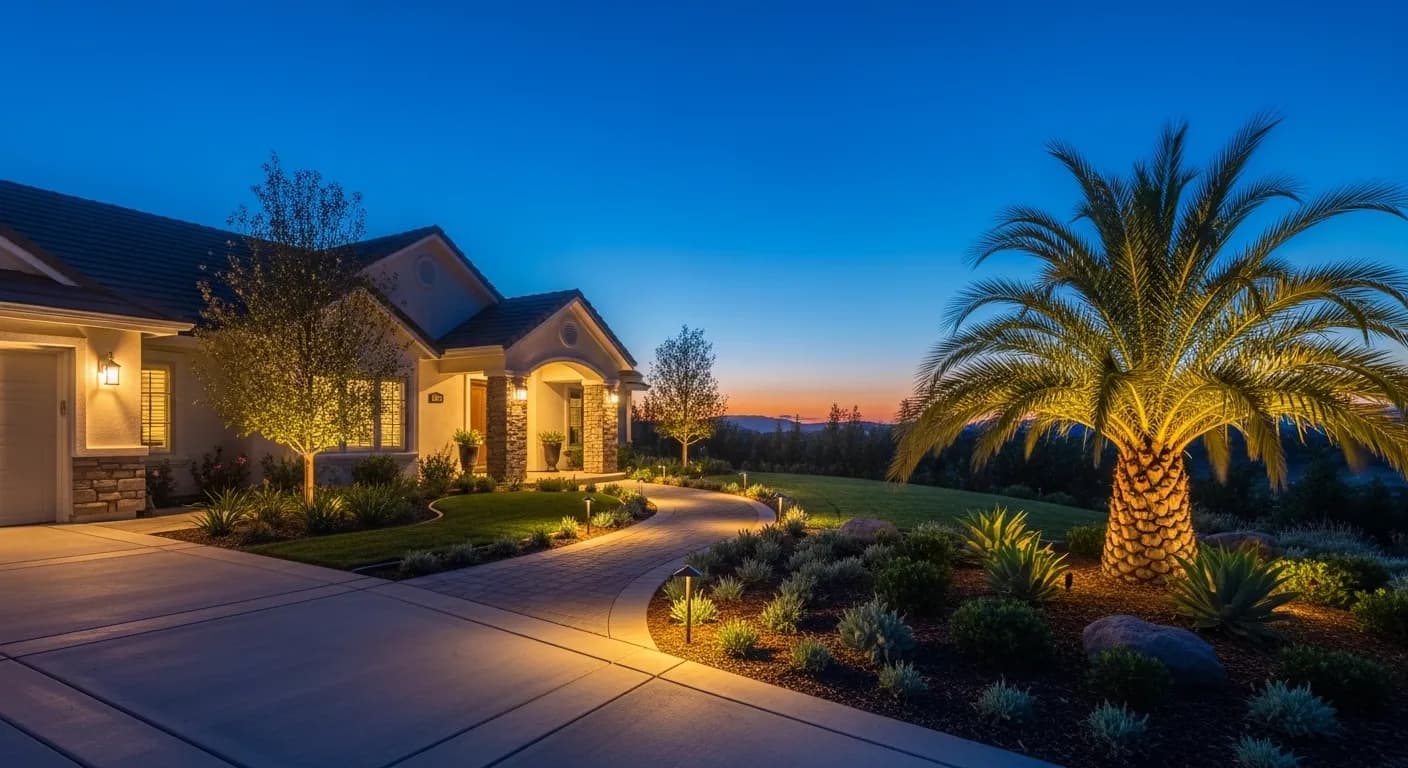
Great outdoor lighting does three things at once: it makes your home look beautiful at night, it keeps your property safe, and it extends your living space into the evening hours. Whether you're lighting up a walkway, highlighting landscaping, or illuminating a patio for entertaining, here's how to get the most out of your outdoor lighting.
The Three Layers of Outdoor Lighting
Professional lighting designers think in three layers, and you should too:
- Ambient lighting: The overall illumination for an area. For outdoors, this includes porch lights, post lights, and patio string lights or overhead fixtures. It sets the general brightness level.
- Task lighting: Focused light where you need it for specific activities — grilling areas, outdoor kitchens, garage entries, and stairways. This is where safety and function come first.
- Accent lighting: Dramatic, directional lighting that highlights architectural features, trees, garden beds, or water features. This is what gives your home that "wow" factor after dark.
Landscape Lighting Techniques
Different placement techniques create very different effects:
- Uplighting: Fixtures placed at ground level pointing up. Perfect for trees, textured walls, and columns. Creates drama and height.
- Downlighting: Fixtures mounted high, pointing down. Mimics natural moonlight and is ideal for patios, seating areas, and driveways.
- Path lighting: Low fixtures along walkways and garden borders. Guides visitors safely while adding a warm glow to your landscaping.
- Silhouetting: Placing a light behind a plant or feature to create a dramatic shadow outline against a wall.
- Wash lighting: Broad, even light across a flat surface like a fence, retaining wall, or house facade.
Security Lighting That Doesn't Look Like a Prison
Security lighting doesn't have to mean harsh floodlights that blind everyone in the neighborhood. Modern motion-activated LED fixtures come in attractive designs that blend with your home's style. Strategic placement at entry points, side yards, and garage areas provides excellent security lighting coverage while keeping your home looking welcoming.
We recommend a combination of always-on low-level lighting (pathway lights, porch lights) supplemented by motion-activated fixtures in less-trafficked areas. This approach deters intruders while keeping your property beautifully lit. If you have a pool or spa, dedicated pool and spa lighting adds both safety and ambiance to your backyard.
For a property-wide plan that covers security as well as curb appeal, see landscape and security lighting design.
Low Voltage vs. Line Voltage
Most landscape lighting uses low-voltage (12V) systems powered by a transformer. Benefits include:
- Safer to install and work around
- Lower energy costs
- Easier to expand and modify
- Available in a wide range of high-quality fixtures
However, the transformer and main low voltage wiring connections should be installed by a licensed electrician. We frequently see DIY landscape lighting with undersized transformers, voltage drop issues from long wire runs, and improper connections that corrode and fail. Getting the infrastructure right from the start saves headaches down the road.
Seasonal displays have their own load considerations — see holiday lighting without the blown circuits.
Smart Outdoor Lighting Controls
Modern outdoor lighting systems can be controlled with timers, photocells (dusk-to-dawn sensors), motion sensors, or smart home integration. A photocell combined with a timer is the most popular setup — lights turn on automatically at dusk and off at a set time. Smart controls let you adjust schedules from your phone and create scenes for different occasions.
Get a Professional Lighting Plan
The difference between amateur and professional outdoor lighting is dramatic. For businesses, we also provide commercial indoor lighting and office lighting solutions. At Westek Electric Corp., we design and install complete outdoor lighting systems for homes throughout Lake Elsinore, Temecula, and Southern California. We'll create a lighting plan that enhances your home's curb appeal, improves safety, and works within your budget. Call (909) 996-6678 for a free consultation.