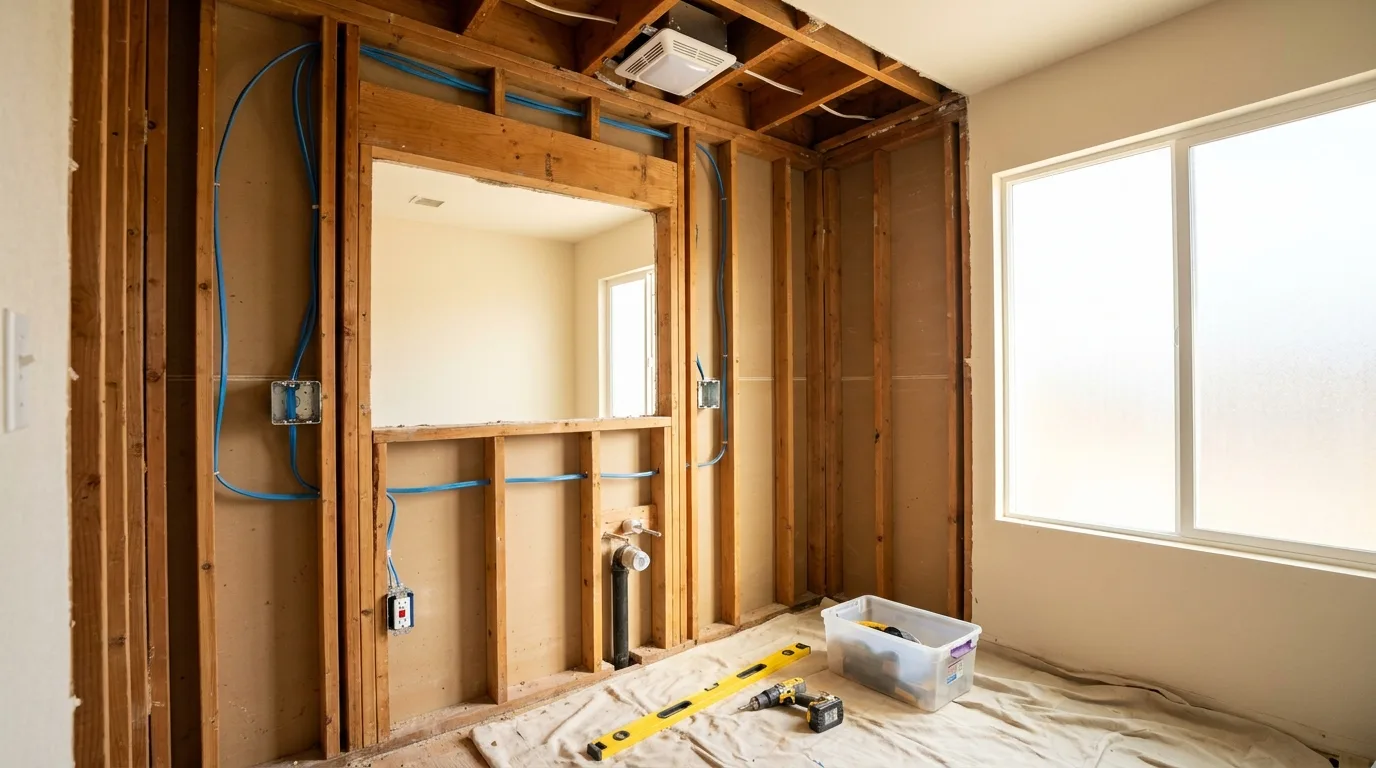
Bathrooms are small rooms with disproportionately strict electrical rules, for an obvious reason: water, bare feet, and grounded metal fixtures in close quarters. Most of the Murrieta bathrooms we rewire were built to a code that has since been revised two or three times, and homeowners are routinely surprised by what a remodel now triggers.
Here is what your project actually needs.
1. A Dedicated 20-Amp Circuit
Bathroom receptacles require at least one 20-amp circuit serving bathroom receptacle outlets only. It cannot also feed the hallway, the bedroom, or the exterior.
You have two options: one 20-amp circuit serving receptacles in multiple bathrooms, or a circuit dedicated to a single bathroom that may also serve that bathroom's lighting and fan. Most remodels are cleaner with the second approach — one bathroom, one dedicated circuit, everything in that room on it.
This matters practically, not just on paper. A hair dryer is 1,500 watts. Two people getting ready on a shared 15-amp circuit is a tripped breaker every morning.
2. GFCI Protection on Everything
All 125-volt receptacles in a bathroom require GFCI protection, with no exceptions. Current code has extended this further: the circuit serving a bathroom exhaust fan or lighting in certain configurations may also require protection, and equipment near a tub or shower has its own rules.
GFCI protects against the specific thing that kills people in bathrooms — current finding a path to ground through a person. It is the single most important device in the room. Our guide to California GFCI and AFCI code requirements covers where else in the house this now applies.
3. Receptacle Placement
At least one receptacle is required within 36 inches of the outside edge of each sink basin, on a wall or partition adjacent to the basin. For double vanities, plan two — the code minimum is one, but nobody with two sinks is happy with one outlet.
Receptacles are not permitted inside a shower or bath enclosure, and face-up receptacles in a countertop are prohibited. If you are adding a heated bidet seat, plan for an outlet near the toilet, since that is frequently forgotten until the fixture arrives.
4. Ventilation Is an Electrical Item Too
California requires mechanical ventilation in bathrooms, exhausted to the outside — never into the attic, which is a surprisingly common and damaging shortcut. Current energy code sets minimum airflow, and humidity-sensing or timer control is typically required rather than a plain switch.
Practically: size the fan for the room, duct it properly, and put it on a humidity sensor or countdown timer. In Murrieta's dry climate people under-run bathroom fans, and the result is the mildew we find on the back of drywall during remodels.
5. Lighting: Layers and Wet Ratings
Fixtures over a tub or in a shower must be rated for damp or wet locations, and recessed fixtures in those zones need the appropriate rating and trim. Beyond compliance, bathroom lighting benefits enormously from layers:
- Vanity lighting at face height on both sides of the mirror rather than a single downlight overhead, which casts shadows exactly where you need to see
- General ceiling light for overall illumination
- Shower light rated for wet locations
- Optional night lighting on a low setting, which is one of the most appreciated upgrades we install
Use 2700K to 3000K for flattering light. Our indoor lighting work covers fixture selection and switching layout.
6. Heated Floors, Towel Warmers, and Steam
Electric radiant floor heat is increasingly popular and requires its own GFCI-protected circuit sized to the mat, with the thermostat and sensor installed before tile goes down. Towel warmers and steam generators likewise need dedicated circuits. These are decisions that must be made before rough-in — adding radiant floor heat after the tile is set means removing the tile.
7. It Needs a Permit
Adding circuits, moving outlets, or rewiring a bathroom requires a permit in Murrieta, and there will be a rough inspection before the walls close. This is not the project to skip it on: a buyer's inspector will look closely at bathroom GFCI protection, and unpermitted bathroom work is an easy finding. See which electrical work needs a permit in Riverside County.
Plan the Electrical Before the Tile
The same advice applies here as in a kitchen remodel: decide the electrical scope before finishes are ordered. Every item above is inexpensive during rough-in and expensive afterward. The U.S. Consumer Product Safety Commission maintains general home electrical safety guidance worth reading if you want background on why these rules exist.
Get Your Bathroom Wired Right
Westek Electric Corp. handles bathroom remodel electrical throughout Murrieta, Temecula, Menifee, Wildomar, and Lake Elsinore — circuits, GFCI, ventilation, lighting, heated floors, and the permit. Call (909) 996-6678 before demolition starts.